
Many people hear UX and UI used as if they mean the same thing, but they serve different purposes. Knowing the distinction is what separates a website that simply looks appealing from one that effectively guides visitors toward becoming customers. User experience (UX) and user interface (UI) work together closely, but they solve different problems, and knowing where one ends and the other begins helps you ask better questions during any design project.
UX: The Experience Behind the Screen
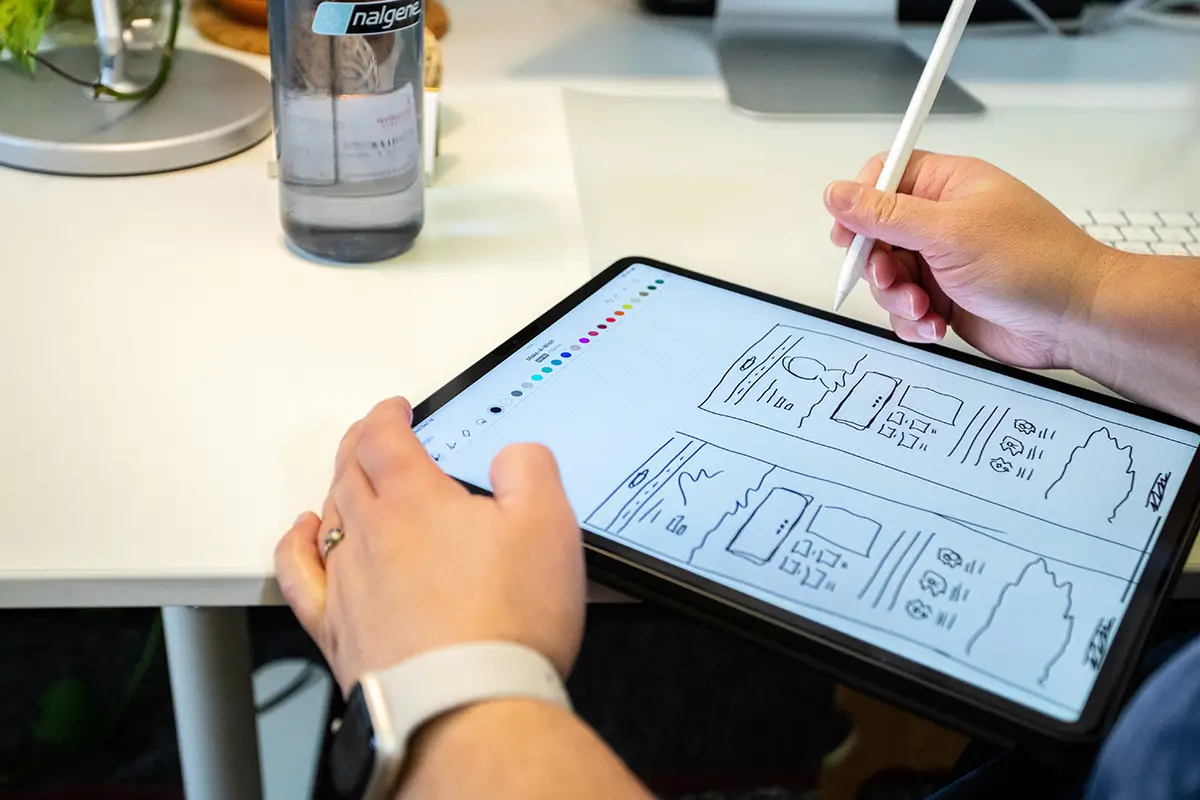
User experience covers how a person moves through a product or website—what they think, what frustrates them, and whether they can accomplish what they came to do. It’s largely invisible when done well, which is part of why it’s so often underestimated. Strong UX work happens before a single visual element is designed: mapping user flows, identifying friction points, and structuring information so it matches how people actually think, not how a business is internally organized.
Research Before Design
Good UX starts with questions, not answers. What is the visitor trying to accomplish? Where do they hesitate? A site can be visually polished and still fail here if the path to a contact form or a purchase isn’t intuitive. This groundwork shapes everything that follows, including the site’s overall web design.
UI: The Interface People Actually See
Where UX is structural, the user interface is visual and interactive—the buttons, colors, typography, spacing, and micro-interactions a visitor engages with directly. A UI designer takes the framework built during the UX phase and gives it form, making sure every clickable element looks clickable and every page communicates hierarchy at a glance.
Where UX and UI Overlap
The two roles depend on each other more than the industry terminology suggests. A beautifully designed interface built on a confusing structure will still frustrate users, and a perfectly logical flow presented with poor visual design will feel untrustworthy. The strongest digital products come from these two disciplines working in close coordination rather than in separate silos.
Why the Distinction Matters for Your Business
Understanding this split changes how you evaluate a project. If your site looks attractive but visitors still bounce quickly or can’t find what they need, that’s usually a UX problem, not a visual one. If the structure works but the site feels dated or hard to trust at a glance, that points to UI. Diagnosing the right issue saves time and prevents businesses from redesigning the wrong layer of their site.
Frequently Asked Questions About UX and UI
What is UI and UX?
UX refers to the overall experience and usability of a website, covering how intuitive and efficient it feels. UI refers to the visual and interactive elements a user directly sees and touches, like buttons, layout, and typography.
Do I need both a UX and UI designer for my website?
Not always as separate hires—many web design teams handle both disciplines together, since they’re most effective when developed in tandem rather than independently.
Which matters more for a small business website?
Both matter, but a confusing structure tends to cost more conversions than an imperfect visual design, so UX groundwork should never be skipped in favor of visuals alone.
Building a Site That Feels as Good as It Looks
At myheartcreative, we treat structure and visual design as inseparable parts of the same project, not a checklist handled in isolation. A site that’s only beautiful, or only functional, leaves value on the table either way.
If your website looks the part but visitors aren’t converting the way you’d expect, the issue might live deeper than the surface design. Our website designers and developers can help you figure out where the friction actually is. When you’re ready, contact us to talk through your project.